News & Updates - Page 3
Engineering deep-dives, product updates, and insights from the Keito team.
Browse by topic below, or jump into the starter guides for the workflows teams ask about most: automatic capture, billable hours, and tracking AI agents alongside people.
Time Tracking Software for Accountants: Features, Comparison, and Buying Guide
How to choose time tracking software for accountants: the features that matter, software categories compared, an evaluation checklist, and what to avoid.

Does Asana Have Time Tracking? Complete Guide for 2026
Does Asana have time tracking? Yes, on Advanced and Enterprise plans. See what Asana's native timer and time fields do, plus the best integrations, workarounds, and automatic alternatives.
How Payroll Software Integrates with Time Tracking: A Complete Guide
How payroll software integrates with time tracking: API connections, native connectors, file sync, and middleware. Includes tool pairings, setup steps, and what to check before going live.
Connect Time Tracking to Xero Invoicing: Setup Guide for Dev Teams
Learn how to connect time tracking to Xero invoicing. Step-by-step setup guide, tool comparison, and common pitfalls for dev teams billing through Xero.

Software Architect Time Tracking: Discovery and Delivery Phases
How software architect time tracking works across discovery and delivery: capture research, design, code-review, and incident time. Billing models and tools for 2026.
Time Tracking Google Calendar Integration: Complete Setup Guide
Connect Google Calendar to Keito, review up to 50 events before saving time, and reuse project and task mapping rules on any plan.

Time Tracking Spreadsheet Not Working? Better Alternatives
Time tracking spreadsheet not working? Learn why spreadsheets fail and compare the best alternatives for software teams — from Toggl to fully automatic tools like Keito.

Time Tracking for Fixed Price Projects: Why It Still Matters
Time tracking for fixed price projects: learn why it matters, how to detect scope creep, calculate true profitability, and improve future estimates with real data.

Zoom Meeting Time Tracking: Automate It
How to set up zoom meeting time tracking automatic — using calendar integration, the Zoom API, or a dedicated tool. Covers billable vs internal categorisation and client mapping.

WakaTime vs Toggl for Developers: Which Is Better?
WakaTime vs Toggl for developers: compare passive coding detection, manual timers, pricing, and workflow fit. Find out which tool suits your dev workflow — and what both miss.
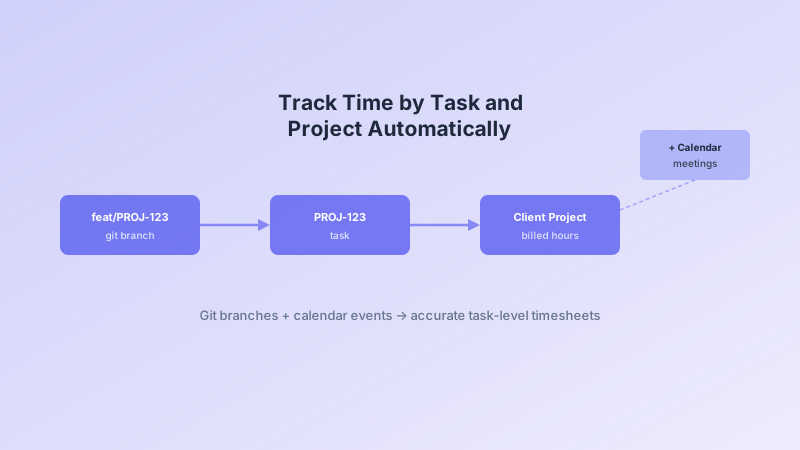
Track Time by Task and Project Automatically
What systems track time by task and project automatically? Git-native trackers turn branches, tickets, and calendars into hours by task, project, and phase.

Client Disputes Billable Hours: What to Do
Client disputes your billable hours? Learn step-by-step response strategies, how to gather evidence, common dispute causes, and prevention tactics for developers and agencies.
Freelance Developer: Generate Invoices from Tracked Time Automatically
Learn how freelance developers can generate invoices from tracked time automatically. Covers the full time-to-invoice workflow, tool chains, invoice formatting, payment terms, and tax considerations.
Remote Team Time Tracking Across Timezones: A Practical Guide
Learn how to track time for remote teams across timezones. Covers timezone-aware reporting, async work patterns, and utilization management for distributed dev teams.
Scrum Master Time Tracking and Sprint Velocity: A Complementary Approach
Learn how scrum masters can combine time tracking with sprint velocity for better planning. Covers capacity analysis, estimation improvement, and avoiding anti-patterns.
CTO Dashboard for Team Utilisation: Key Metrics, Data Sources, and Design
Build a CTO utilisation dashboard with 5 key metrics: billable utilisation, project allocation, sprint capacity, meeting ratio, and trend analysis.

Consultant Time Tracking: How Firms Track Multi-Client Hours
How do consultants track multi-client project hours? Log every hour to a client, project and task, apply role rates, approve, then invoice per client.
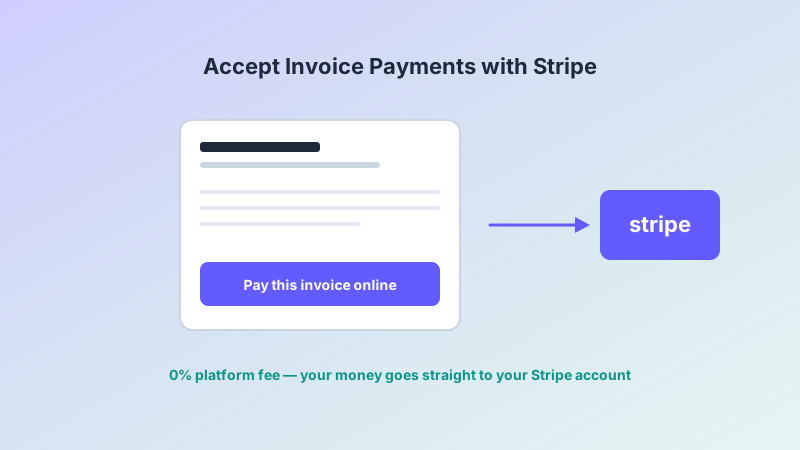
Accept invoice payments online with Stripe — and we don't take a cut
Keito invoices now have a Pay online button powered by Stripe. Money goes straight to your Stripe account. Keito charges zero platform fees on payments — ever.
Billable Hours Not Matching Your Invoice? Here Is How to Find and Fix the Discrepancy
Billable hours not matching your invoice? Audit rounding, timezones, rates, and billable flags with this step-by-step troubleshooting guide for developers.

How to Track Time Across Multiple Git Repos Without Losing Your Mind
Track developer time across multiple git repos with unified dashboards, repo-to-client mapping, and branch-based attribution. Polyrepo and monorepo strategies.
How to Backfill Timesheets from Calendar Events (Step-by-Step Guide)
Backfill timesheets from Google Calendar or Outlook events. Step-by-step export, parsing, categorisation, and automation scripts for developers and freelancers.

How to Separate Billable and Non-Billable Hours (With Examples)
Learn how to separate billable and non-billable hours with a practical framework. Includes examples, grey-area guidance, and implementation steps for software teams.

How to Bill Clients for Meetings vs Coding Time (Without Awkward Conversations)
Learn how to bill clients for meetings vs coding time. Covers billing models, contract language, and tips for reducing meeting overhead in software projects.

Time Tracking for Dev Agencies with Multiple Clients: The Complete Guide
Learn how dev agencies can track time across multiple clients automatically. Reduce revenue leakage, automate client allocation, and generate client-ready reports.
Ready to stop overpaying?
Start Solo at $19 USD/month, or bring the team onto flat-rate Pro when you are ready.